From Big Wins to Bigger Impact: Our Forward Flight Path in 2026
 ͏‌ ͏‌ ͏‌ ͏‌ ͏‌ ͏‌ ͏‌ ͏‌ ͏‌ ͏‌ ͏‌ ͏‌ ͏‌ ͏‌ ͏‌ ͏‌ ͏‌ ͏‌ ͏‌ ͏‌ ͏‌ ͏‌ ͏‌ ͏‌ ͏‌ ͏‌ ͏‌ ͏‌ ͏‌ ͏‌  ͏‌ ͏‌ ͏‌ ͏‌ ͏‌ ͏‌ ͏‌ ͏‌ ͏‌ ͏‌ ͏‌ ͏‌ ͏‌ ͏‌ ͏‌ ͏‌ ͏‌ ͏‌ ͏‌ ͏‌ ͏‌ ͏‌ ͏‌ ͏‌ ͏‌ ͏‌ ͏‌ ͏‌ ͏‌ ͏‌  ͏‌ ͏‌ ͏‌ ͏‌ ͏‌ ͏‌ ͏‌ ͏‌ ͏‌ ͏‌ ͏‌ ͏‌ ͏‌ ͏‌ ͏‌ ͏‌ ͏‌ ͏‌ ͏‌ ͏‌ ͏‌ ͏‌ ͏‌ ͏‌ ͏‌ ͏‌ ͏‌ ͏‌ ͏‌ ͏‌  ͏‌ ͏‌ ͏‌ ͏‌ ͏‌ ͏‌ ͏‌ ͏‌ ͏‌ ͏‌ ͏‌ ͏‌ ͏‌ ͏‌ ͏‌ ͏‌ ͏‌ ͏‌ ͏‌ ͏‌ ͏‌
Audubon Texas
From Big Wins to Bigger Impact: Our Forward Flight Path in 2026
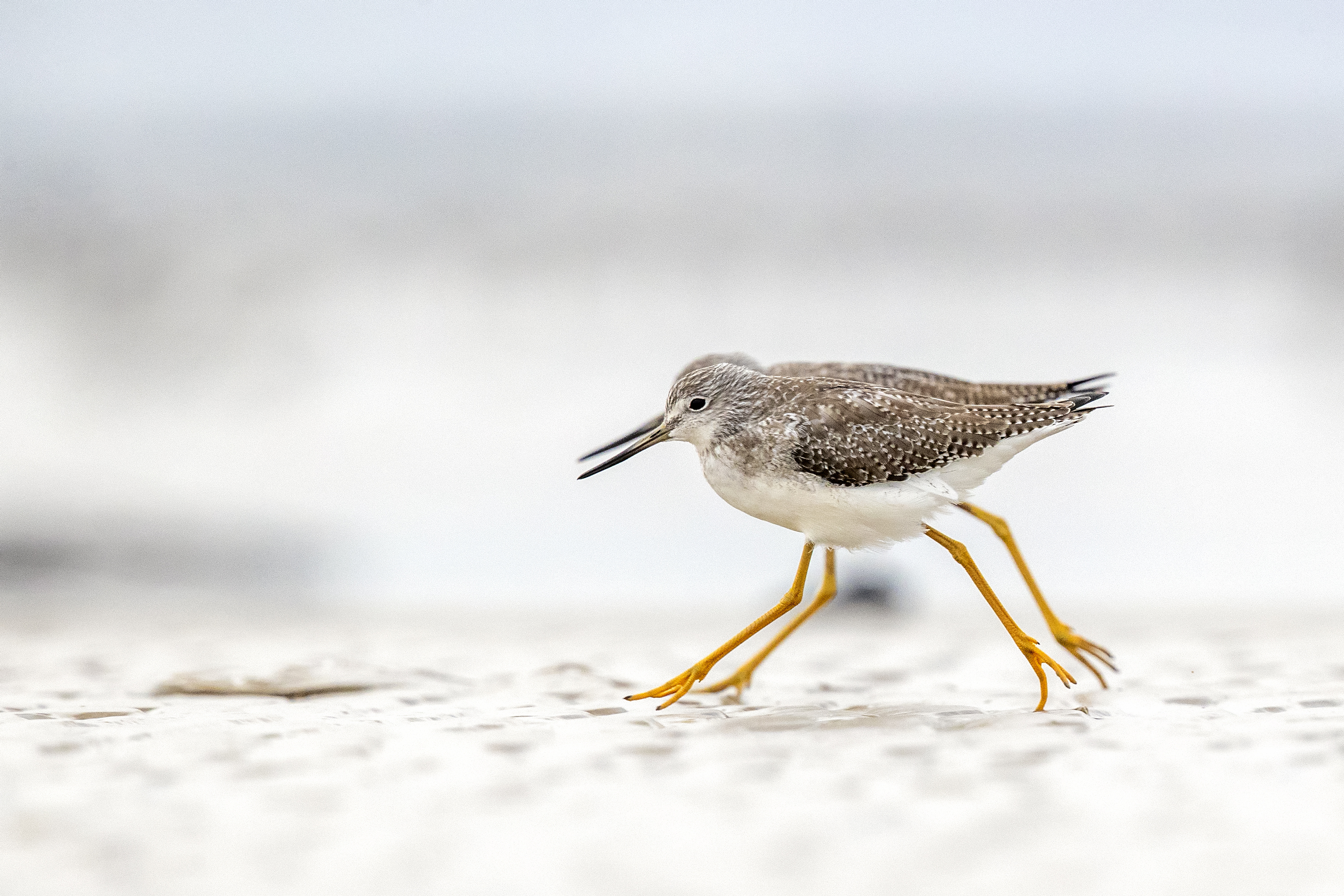
Greater Yellowlegs
View from the Birdhouse
Data-driven Conservation Bends the Bird Curve.
by Richard Gibbons, Director of Conservation


How do we know what conservation work needs to be adapted, expanded, or redirected to stop and reverse the population declines for the birds that need our help most? This question and the planning work by Audubon staff, volunteers, and partners is what forged Audubon’s Flight Plan. This strategic plan considers priority species population trends and strongholds, communities where we are committed to engaging and how climate change is predicted to affect these places.

With losses across habitats and greatest concern for grassland birds and shorebirds, Audubon’s efforts in Texas have increasingly focused on working lands such as cattle ranches and coastal habitats.  READ MORE
Greater Yellowlegs - Bolivar Flats Shorebird Sanctuary, TX - Tim Timmis/Audubon Photography Awards
pelican
Program Spotlight: Turning Strategy into Results.
Working to Rebuild Important Habitats. 
by Alexis Baldera, Senior Manager, Coastal Program 

Waterbirds depend on Texas’s coastal islands for nesting. Twenty-six species of colonial waterbirds gather on these islands each year to nest and raise their chicks. With open water separating the mainland from the islands, these sites naturally provide some protection from predators and human disturbance. Many of the islands are man-made, created during the dredging of coastal waterways, and are now severely eroding. Audubon and partners across the coast work to manage these sites to make them as suitable for bird nesting as possible. As erosion continues, we are also working to rebuild and restore these important habitats.


Audubon addresses these pressures through direct habitat protection, restoration, and science-based monitoring. READ MORE


Herds for Birds – Creating Pathways to Engage.  
by Anita Gilson, Range Ecologist

Land stewards in the Audubon Conservation Ranching program support some of North America’s most important bird habitat. However, the producers stewarding this critical habitat are often spread across vast distances, managing complex operations with limited access to peer networks or trusted conservation guidance. Many producers are interested in bird-friendly land management but face barriers to participation, including navigating technical assistance programs, understanding financial incentives, and finding examples of practices that work in real-world ranching systems.   As our Audubon Conservation Ranching program expands rapidly across Texas, it has become clear that program growth alone is not enough. To achieve lasting, landscape-scale impact aligned with Audubon’s Flight Plan, we need stronger connectivity among producers and clearer pathways for new landowners to engage with the program. READ MORE


Saving Habitat Across a Changing Landscape. 
by Chloe Crumley, Engagement Manager 

Conserving and restoring habitat is one of Audubon’s core strategies for bending the bird curve, but this work is becoming increasingly challenging in Texas. With the state’s population expected to double by 2050, rapid development threatens to outpace the protection of open lands and neighborhood green spaces. And with most Texans now living in urban areas, the health of our communities—for birds and people—will increasingly depend on the conservation actions we take today in our cities. But it’s not only cities that deserve our attention; university campuses and large, institutional landscapes play a critical role as well.  Bird City Texas was created to address the challenges from rapid urbanization by helping communities reduce threats to birds while improving habitat, public engagement, and environmental stewardship. READ MORE


Texas Takes Flight: Cities and Campuses Uniting for Bird‑Friendly Buildings 
by Chloe Crumley, Engagement Manager 


While we’ve made tremendous progress through the Lights Out, Texas! initiative—a movement championed by Audubon Texas and partners where more than 20 cities and landmarks, including Dallas’s Reunion Tower, dim their lights to protect migrating birds—reducing light pollution is only half the challenge. To fully safeguard birds in flight, we must also address the threat posed by glass itself.

We design offices, schools, and homes with massive floor-to-ceiling windows because we crave a connection to the outdoors. However, to a bird, that transparent glass is invisible, or worse, its reflection of the sky and trees looks like a clear path forward.  READ MORE 
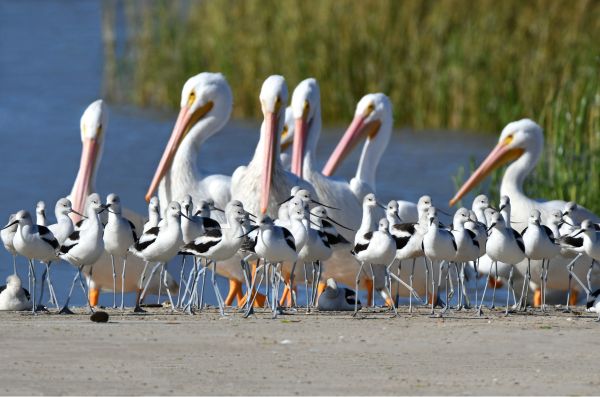
American Avocet & American White Pelican, Texas - Nate Chappell/Audubon Photography Awards
Warbler
Powered by People

Boots on the Ground in Texas Communities are What Makes a Difference.
by Chloe Crumley, Engagement Manager 

Audubon Chapters are the boots on the ground across the Lone Star State, and we are lucky to have local Audubon chapters and organizations that support the Audubon mission. Chapters know the community, the needs, and the birds. They can share the message of bird conservation and make true change whether it is planting native gardens in their neighborhoods or hosting Birding 101 classes in Spanish. The work of chapters is vital as we work towards building a flock of diverse Audubon members that move up the ladder of engagement.  READ MORE


Texas Leaders in Conservation Enters Its 11th Year with New Partnerships and Fresh Momentum.
by Yvette Stewart, Manager, Community Outreach 

The Texas Leaders in Conservation (TLC) program kicked off its eleventh year in the 2025–2026 school year with a renewed focus on “starting anew.” This year brings a fully new cohort at Young Women’s STEAM Academy at Balch Springs, a new Community Liaison at Irma Lerma Rangel Young Women’s Leadership School in Dallas, and many new students at Young Women’s Leadership Academy in San Antonio. TLC also launched the first year of its new five‑year curriculum cycle, beginning with Climate Change before moving through Water, Coasts, Working Lands, and Bird‑Friendly Communities—ensuring students can participate all four years of high school without repeating a topic. READ MORE 
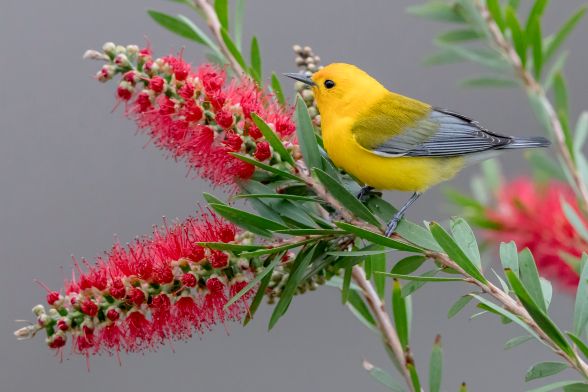
Prothonotary Warbler, South Padre Island, TX - Williams Burns/Audubon Photography Awards
LeContes Sparrow
Songs from Our Centers
Building Community Through Environmental Education and Creating Better Habitat for Birds.
Trinity River Audubon Center

In reflecting on 2025, it was clear Trinity River Audubon Center (TRAC) deeply fostered building community through environmental education and creating better habitat for birds along the way. One of the habitat management goals at TRAC is to create more suitable habitats for grassland dependent focal species such as Grasshopper Sparrow and LeConte’s Sparrow, and the local community, partnerships, and supporters are doing the work with us side by side.  Each opportunity is designed to help others discover the wonders of ecology in their own backyard, while learning how to be stewards to the environment. READ MORE 


Can You Have Too Many Native Plants in Your Landscape?
Dogwood Canyon Audubon Center 

In a word, no. Not when we’re talking about our urban and suburban spaces, where natural habitat is shrinking and birds are struggling to find what they need to survive. A landscape rich with native plants becomes more than a pretty yard; it becomes an oasis. Birds, butterflies, bees, and countless other species rely on these plants for food, shelter, and nesting sites. And the benefits don’t stop with wildlife. Native landscapes help cool our cities, absorb floodwater, and improve the air we breathe.  READ MORE

Join us for our next Native Plant Sale. Details are available the Audubon website. We would love to see you there.  


Expanding Impact After Dark: Technology, Community Science, and Conservation. 
Mitchell Lake Audubon Center

As daylight fades, Mitchell Lake Audubon Center transforms; wildlife stirs, the air cools, and nighttime sounds like coyotes and Common Pauraques begin to rise. This year, we’ve leaned into that magic by expanding our evening programs and reimagining how after‑dark experiences can connect our community to conservation.   Through a new partnership with Bat Conservation International, staff and interns completed Bat Walk Ambassador training, allowing us to identify bat species using acoustic monitors that translate echolocation into frequencies we can see and hear. READ MORE 
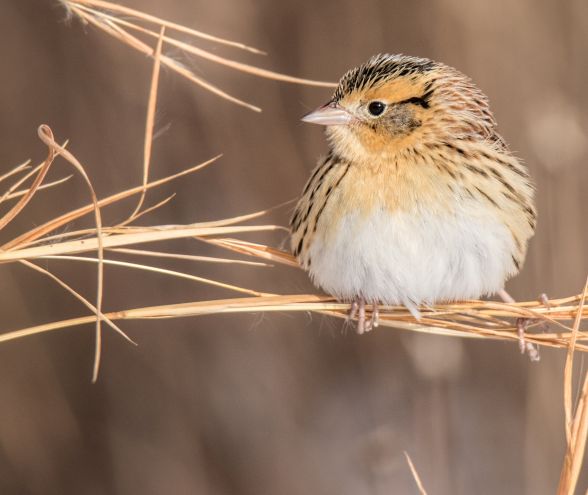
LeContes Sparrow - Tim Kauffman/Audubon Photography Awards
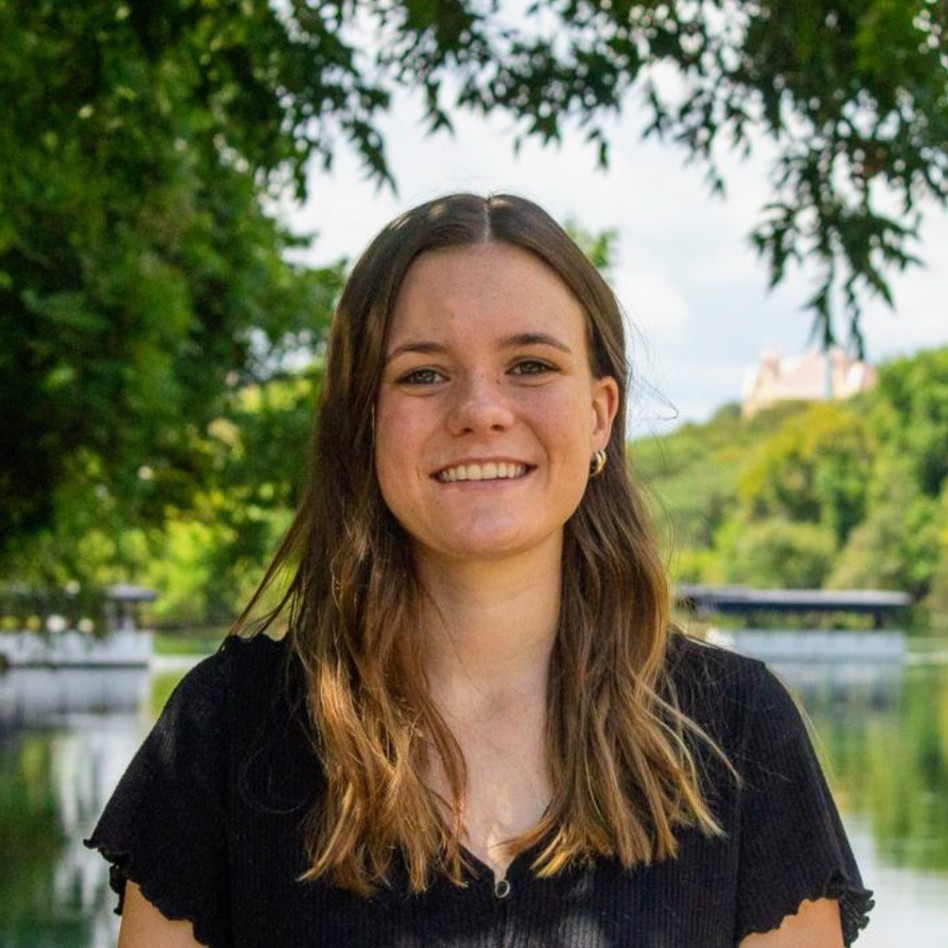
Delaney Hankins
Meet Delaney, Knowledge Tools and Communications Intern.
Delaney earned her bachelor’s degree in Geography and Environmental Studies from Texas State University, where she focused on supporting local conservation nonprofits and community green spaces. Born and raised in Texas, she is excited to contribute to Audubon’s mission in Texas and help connect people to the natural environment through the beauty and importance of birds.  
 
Delaney participated in her first Audubon Christmas Bird Count and shares her experience with us. READ MORE
Delaney Hankins - Audubon Texas Intern
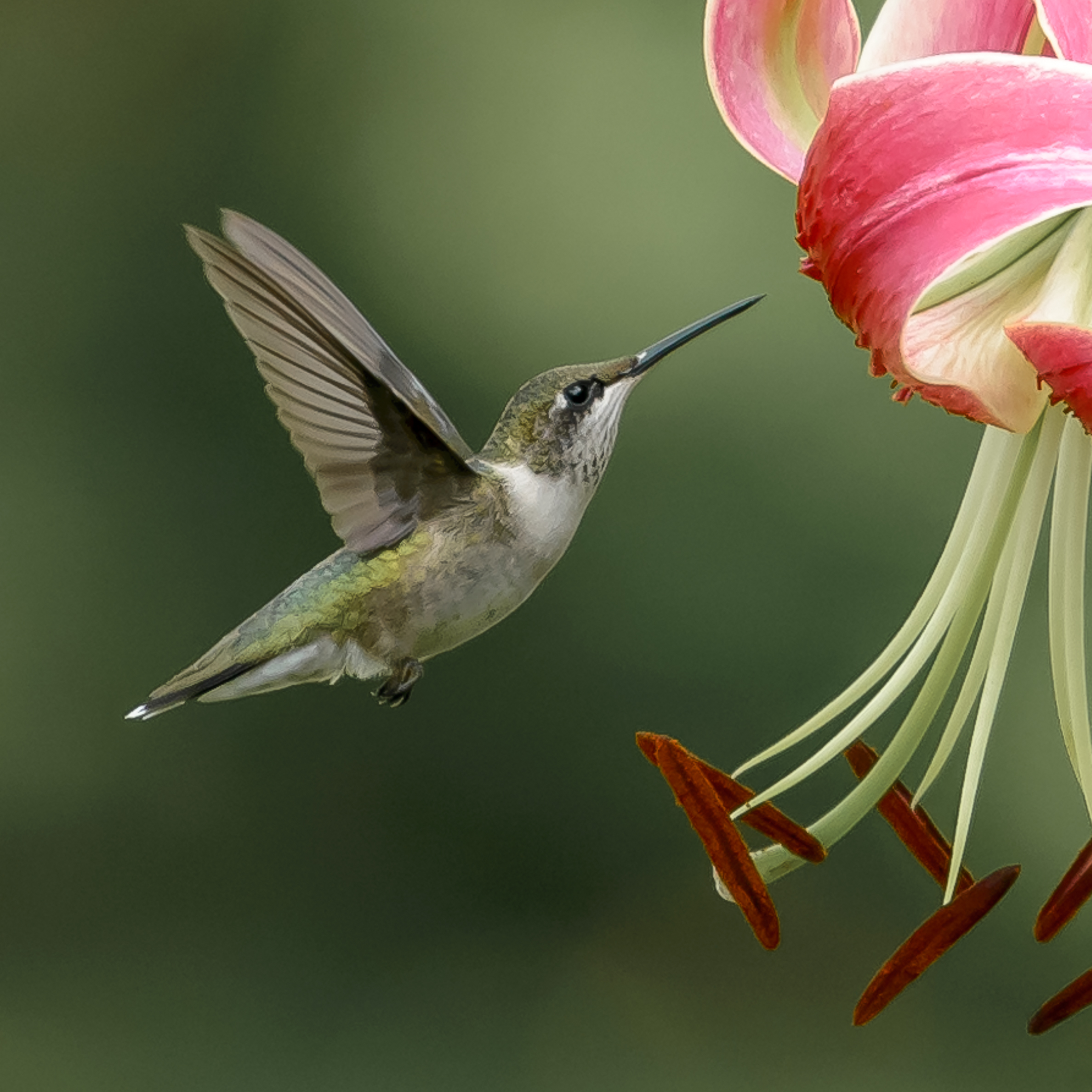
Ruby-throated Hummingbird
2026 Applications for the Texas Women in Conservation, Terry Hershey Award are being accepted!
Nominations are being accepted for the 2026 Texas Women in Conservation Terry Hershey Award. This prestigious award honors outstanding women who have demonstrated exceptional leadership in conservation, environmental stewardship, and community engagement across Texas. 

The nomination criteria and application are available online and will remain open until Friday, February 27, 2026. We encourage you to nominate a woman who has made a significant impact in the field. Let’s come together to celebrate and honor the incredible women shaping the future of conservation in Texas!
Ruby-throated Hummingbird- Linda Leighton/Audubon Photography Awards
SXSW 2026 Logo
SXSW is for the Birds!
SXSW is an innovation conference that provides an opportunity for the global community of creatives to encounter cutting-edge ideas, discover new interests, and network with other professionals who share a similar appetite for forward-focused experiences.

This year, Dr. Elizabeth Gray, CEO of National Audubon Society will be a featured speaker at a session on March 16th,  "It All Begins With Birds – Insights, Joy, and Lessons from Avian Life" alongside actress and National Audubon Board Member Lili Taylor, and Ramona Schindelheim, journalist and podcast host of, Birds & Nerds.

If you're going to SXSW, join the session and let us know you're there! 
SXSW 2026 Logo
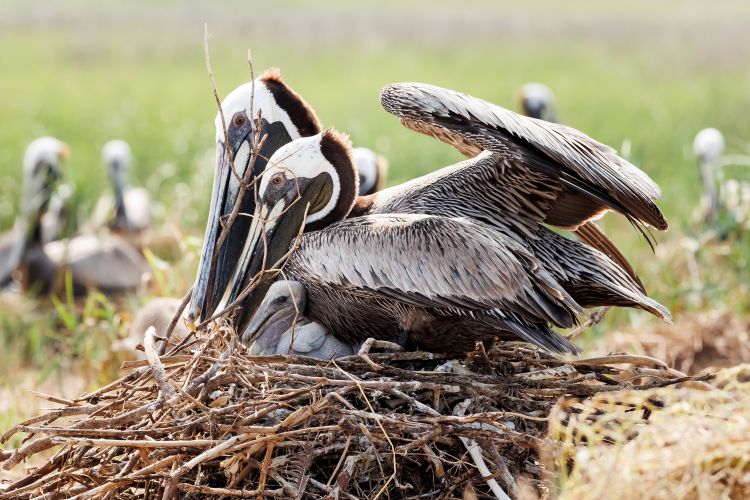
Brown Pelican
Thank you to the Baker Hughes Foundation!
Thank you to the Baker Hughes Foundation for advancing conservation and strengthening coastal resilience along the Texas coast!

Audubon’s mission is simple and urgent: to protect birds and the places they need, today and tomorrow. For more than 100 years, Audubon has been conserving habitat, protecting wildlife, and inspiring stewardship along Texas’ coastal ecosystems.

Thanks to Baker Hughes Foundation’s recent grant and partnership, Audubon looks forward to continuing to protect and restore critical bird habitat across 175 bird islands along the Texas coast, ensuring these islands remain safe and resilient for generations of birds and people to come.

This work is more important than ever. Coastal birds are facing unprecedented challenges driven by biodiversity loss and climate challenges. The critical rookery islands we manage serve as lifelines for more than 60,000 nesting waterbirds representing 26 species, including iconic birds like the Brown Pelican and Roseate Spoonbill. This investment also strengthens coastal communities. Healthy islands and wetlands help buffer storm impacts, improve water quality, and build resilience in the face of climate change. Just as importantly, our coastal team engages anglers, boaters, and beachgoers, empowering them to understand why these places matter and how they can help protect them.

It is thanks to partners like the Baker Hughes Foundation that enables Audubon to deliver science-based solutions and ensure that coastal ecosystems and the birds and communities that depend on them continue to thrive.
Brown Pelican - Erica Kavadias/Audubon Photography Awards
New Website Announcement

Audubon is unifying all Regional, State, and Center websites into one cohesive platform to better showcase our conservation impact from local work to hemisphere-wide initiatives. Built in partnership with teams across the network, the new site will feature location-based content to help visitors connect with local events, actions, and stories. Communications teams are currently completing final quality checks ahead of the mid-March launch. 

Visit us online in the latter half of March to explore the full site!


The Audubon Conservation Ranching Program is funded in part by the Dixon Water Foundation, the Natural Resources Conservation Service, and the National Fish and Wildlife Foundation.
Thank you for your continued support of Audubon. The National Audubon Society protects birds and the places they need, today and tomorrow, throughout the Americas using science, advocacy, education, and on-the-ground conservation. Audubon's state programs, nature centers, chapters and partners have an unparalleled wingspan that reaches millions of people each year to inform, inspire and unite diverse communities in conservation action. Since 1905, Audubon's vision has been a world in which people and wildlife thrive. Audubon is a nonprofit conservation organization. For more information, events, and to find your local chapter visit https://tx.audubon.org/. You can also find us on Facebook, Twitter, and Instagram.
Connect
CONNECT WITH US
FacebookInstagramLinkedInYouTube
Audubon Texas
2407 S. Congress Ave., Ste. E - #477, Austin, TX 78704 USA
512-488-1266 | tx.audubon.org

© 2026 National Audubon Society, Inc.

Unsubscribe