͏‌ ͏‌ ͏‌ ͏‌ ͏‌ ͏‌ ͏‌ ͏‌ ͏‌ ͏‌ ͏‌ ͏‌ ͏‌ ͏‌ ͏‌ ͏‌ ͏‌ ͏‌ ͏‌ ͏‌ ͏‌ ͏‌ ͏‌ ͏‌ ͏‌ ͏‌ ͏‌ ͏‌ ͏‌ ͏‌  ͏‌ ͏‌ ͏‌ ͏‌ ͏‌ ͏‌ ͏‌ ͏‌ ͏‌ ͏‌ ͏‌ ͏‌ ͏‌ ͏‌ ͏‌ ͏‌ ͏‌ ͏‌ ͏‌ ͏‌ ͏‌ ͏‌ ͏‌ ͏‌ ͏‌ ͏‌ ͏‌ ͏‌ ͏‌ ͏‌  ͏‌ ͏‌ ͏‌ ͏‌ ͏‌ ͏‌ ͏‌ ͏‌ ͏‌ ͏‌ ͏‌ ͏‌ ͏‌ ͏‌ ͏‌ ͏‌ ͏‌ ͏‌ ͏‌ ͏‌ ͏‌ ͏‌ ͏‌ ͏‌ ͏‌ ͏‌ ͏‌ ͏‌ ͏‌ ͏‌  ͏‌ ͏‌ ͏‌ ͏‌ ͏‌ ͏‌ ͏‌ ͏‌ ͏‌ ͏‌ ͏‌ ͏‌ ͏‌ ͏‌ ͏‌ ͏‌ ͏‌ ͏‌ ͏‌ ͏‌ ͏‌
Audubon Center at Debs Park
Center Updates Fall 2025
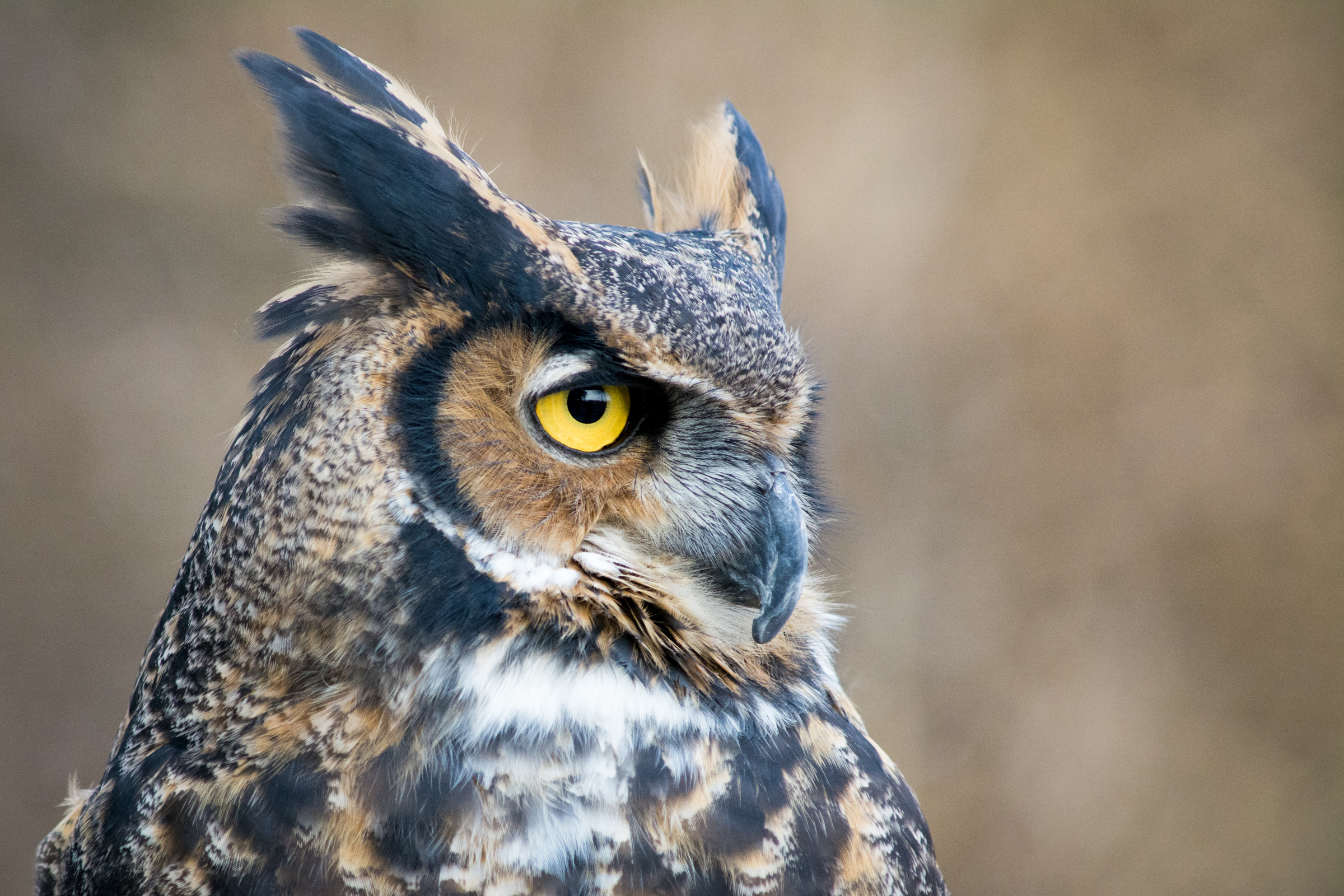
Great Horned Owl. Photo: Shannon Quinn/Audubon Photography Awards
Happy Owl-o-Ween!
From the hoots of our resident owls to the rustling of leaves underfoot, as the fall season settles over Debs Park, our trails are alive with the sights and sounds of autumn. It’s a beautiful time to explore the park, connect with nature, and reflect on the ways our local ecosystems change throughout the year.

Whether you’re visiting for a quiet walk, a community event, or one of our seasonal programs, there’s plenty to enjoy this spooky season! This month, we’ve been busy hosting educational programs, welcoming our newest cohort of FLIGHT interns, and continuing our habitat restoration efforts across the park.

We invite you to keep an eye out for some of our nocturnal neighbors who remind us that even after dark, Debs Park is full of life. Some of these neigh-birds are the highlight for this newsletter for our own spooky Owl-o-Ween!

Thank you for being part of our community, and we look forward to seeing you on the trails soon! Your participation helps us continue building a stronger, greener Los Angeles for both people and wildlife. 
 About Us...
Great Horned Owl. Photo: Shannon Quinn/Audubon Photography Awards
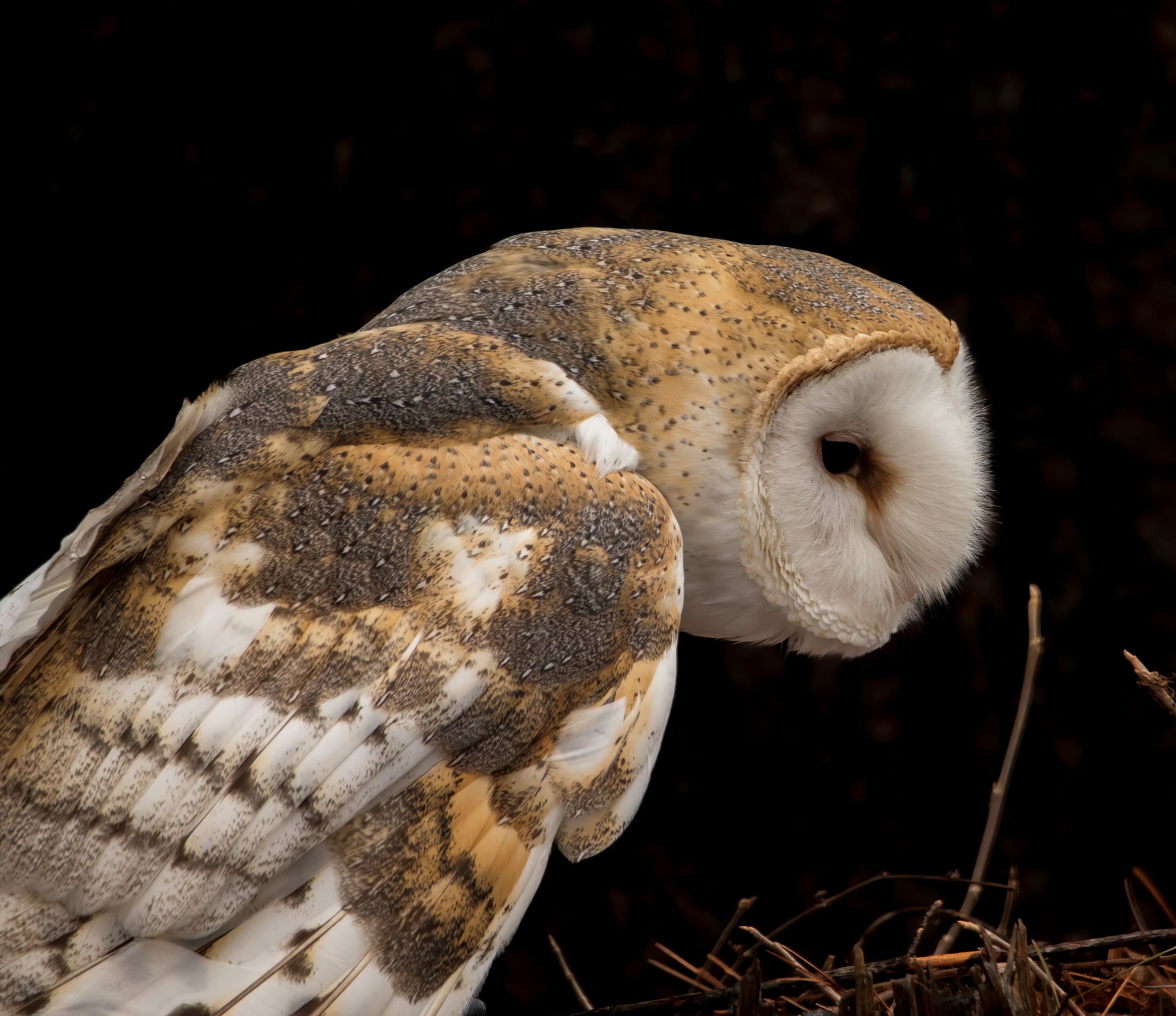
American Barn Owl
The Ghosts of the Night Sky
American Barn Owls are one of the most numerous species of owls that can be found around Los Angeles. Their bellowing screeches (often mistaken for the call of a Western Screech-Owl, which actually hoots rather than screeches) echo from the palm trees at night in almost every neighborhood. Because American Barn Owls’ diet consists mostly of rodents, they can live and thrive close to humans. The trash we leave out, the fruit trees we grow, and the lush yards we maintain are major attractants to rats, mice, and gophers which provide plenty of food for urban and suburban barn owls.

As Halloween draws near, an American Barn Owl is the perfect bird to write about. From their ghostly silent flight, pitch-black eyes, the way they build their 'nest', and their eerie toe dusting behavior, these owls are unique and a little creepy!
Tomas Koeck/Audubon Photography Awards
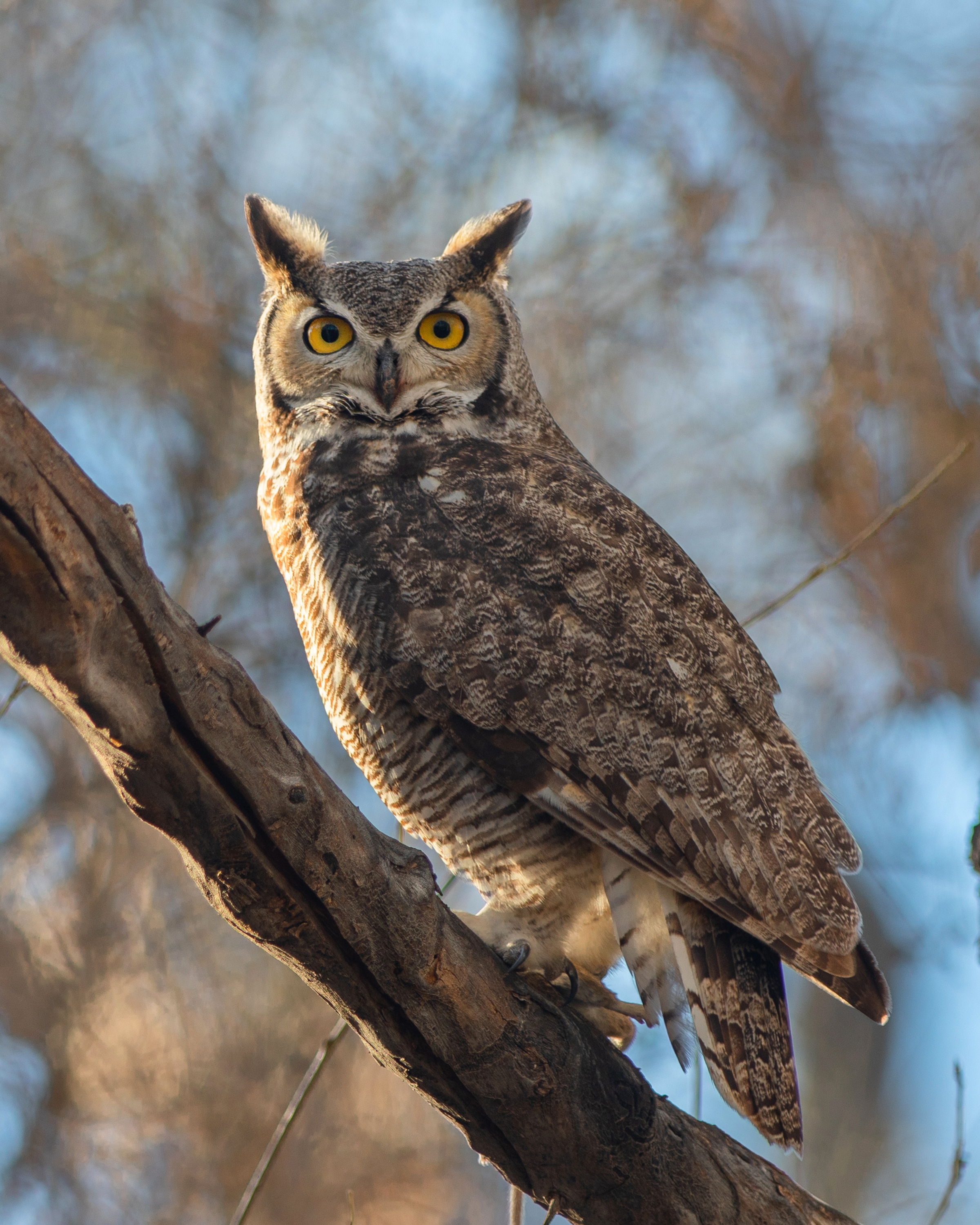
Great Horned Owl. Photo: Roger van Gelder/Audubon Photography Awards
'Owl' About Great Horned Owls
Imagine you are walking through a woodland on a crispy autumn evening: the leaves are crunching under your boots, there is a chill in the air, and the sun has just begun to set. You hear a distinctive call in the distance that goes something like hoo hoo hoo-hoo-hoo hooooo.

What might be making that sound? None other than the owl of storybooks, the Great Horned Owl.

With its tufts of feathers that resemble ears and its large stature, the Great Horned Owl is perhaps the most iconic owl species of Southern California and across the Americas. These very large owls can occupy all sorts of habitats including woodlands, open grasslands, riparian areas, and even thrive in our urban environment, making them the most commonly sighted owl in the city.
Great Horned Owl. Photo: Roger van Gelder/Audubon Photography Awards
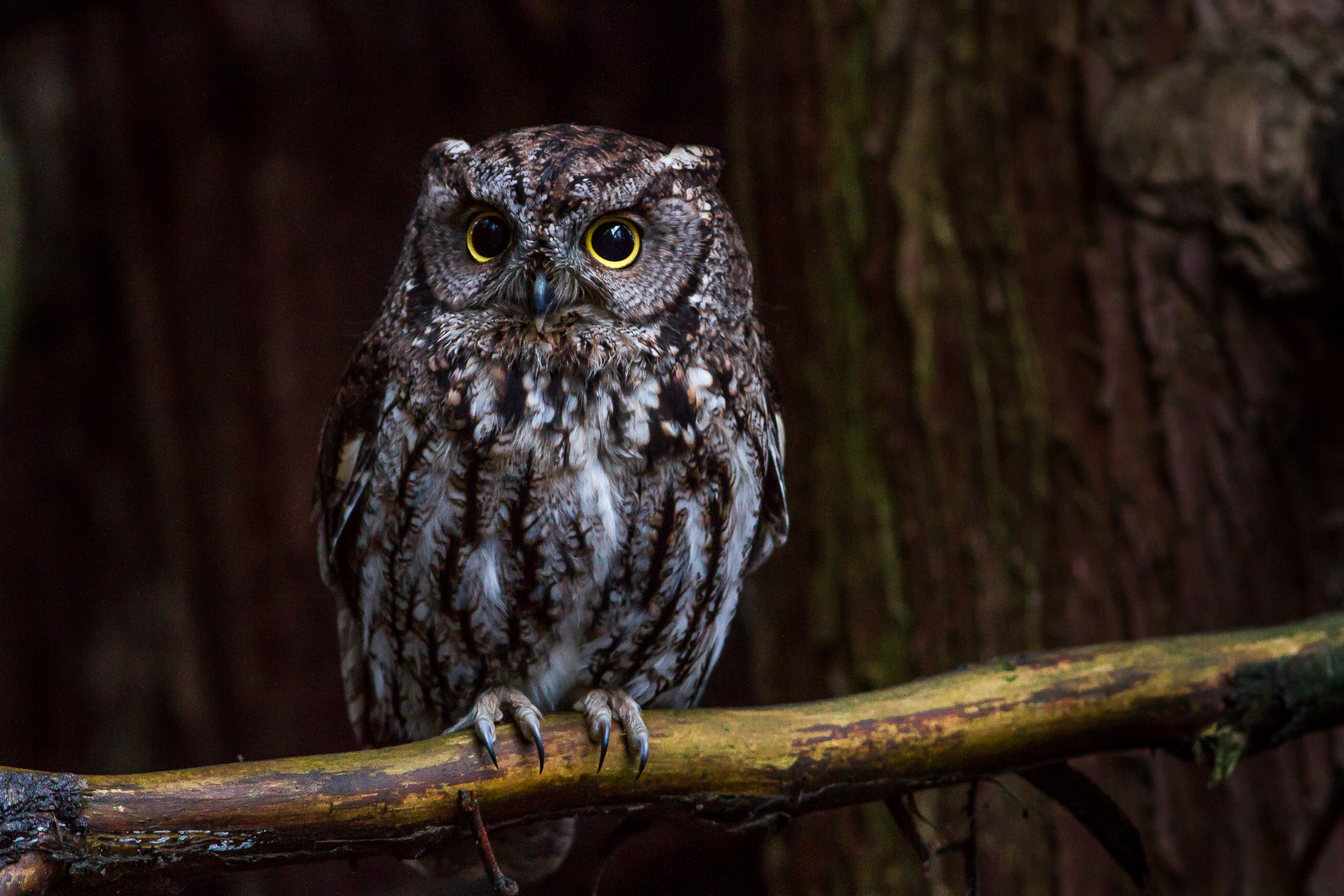
Western Screech-Owl, Portland, Oregon
My Neighbor, the Western Screech-Owl
Have you ever heard a strange whistle in the night sometimes?

It may have sounded similar to a Great Horned Owl with its hoo-hoots, but where a Great Horned Owl's song echoes, this one is a bit peculiar. It starts off with a similar hoo-hoot, but then rapidly accelerates, sounding almost like a cue ball bouncing on a wooden floor before rolling away.

If you have heard such a sound before, that is the song of the Western Screech-Owl, which does anything but screech!

Standing at a 'mighty' 7-inches to 10-inches tall, the Western Screech-Owl is an inconspicuous, but common little owl of the west. It sports small ear tufts on its square, stoutly head and peers at the world through large, yellow eyes. Its gray plumage allows it to camouflage excellently against a backdrop of trees. When frightened, it will pull its feathers taut, causing it to blend in perfectly with tree bark. It may be that you have one of these owls as your neighbor, but their nightly disguise keeps you from noticing them!
Western Screech-Owl, Portland, Oregon Photo: Ken Shults/Audubon Photography Awards
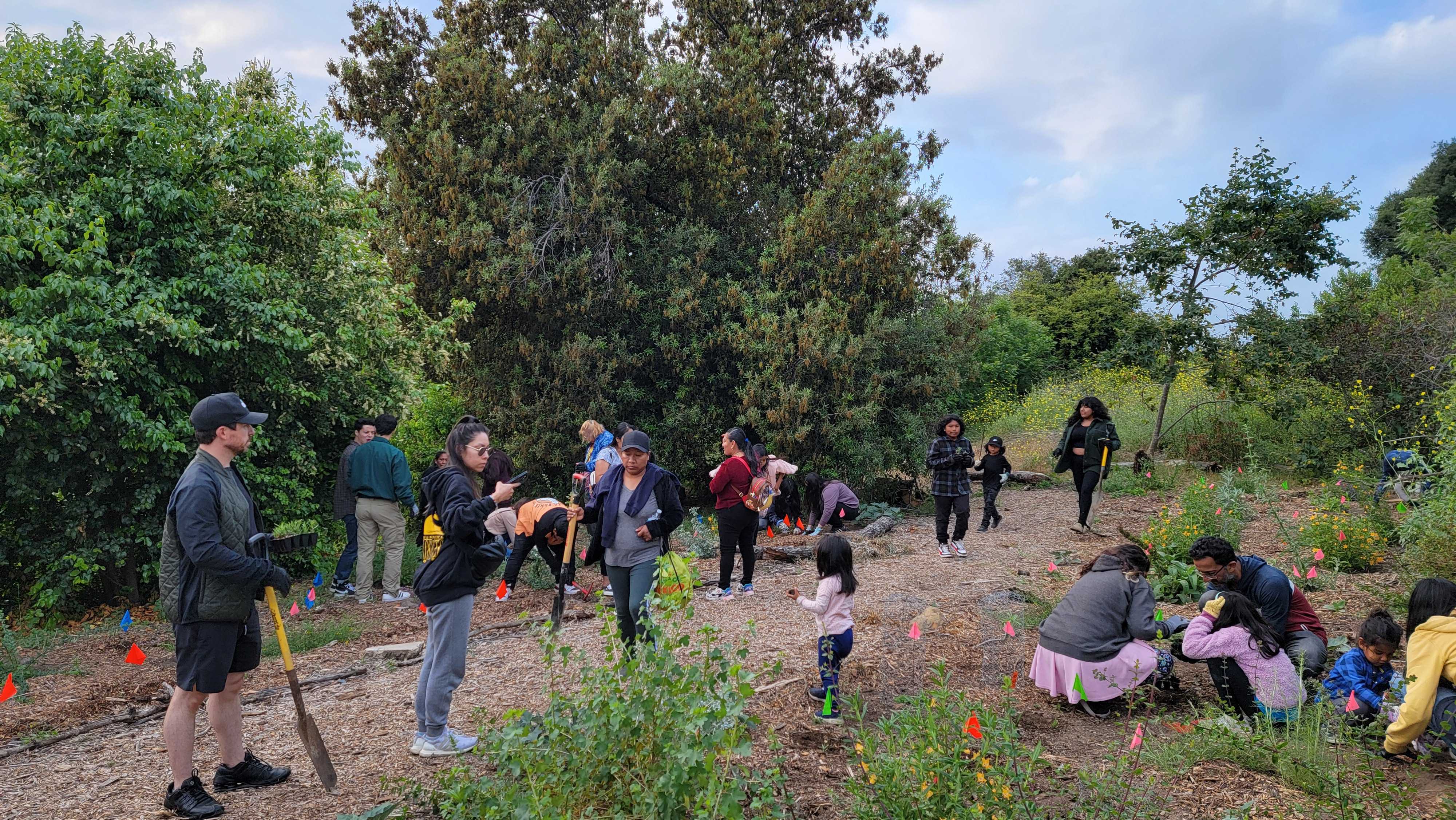
A group of people with gardening tools are gathered around a restoration site.
Upcoming Events
As fall rounds the corner towards winter, the days are becoming shorter and the nights, longer. It also means that planting season is upon us, so check out our events below!:

  • 10/31-11/2 & 11/7-11/9 – Los Nogales Nursery is closed due to Theodore Payne Foundation’s Fall Plant Sale.
  • 11/1 – From Earth to Art: Building with Natural Materials.
  • 11/7 – Test Plot: Habitat Restoration
  • 11/8 – From Earth to Art: Building with Natural Materials.
  • 11/9 – Community Habitat Restoration
  • 11/15 – 4 Mile Hill Challenge with Aztlan Athletics
    • Use code Audubon2025 for $5 off your registration, each use of the code provides a $10 donation to the Audubon Center at Debs Park's F.L.I.G.H.T. program, which empowers youth through hands-on environmental education, leadership, and community connection!
  • 11/16 – Community Bird Walk
  • 11/22 – Old Time String Jam Band
  • 11/27-11/30 – Audubon Center at Debs Park is closed in observance of holidays. 
  • 12/5 – Test Plot: Habitat Restoration
  • 12/14 – Community Planting Day
Keep an eye on our social media and check out our events page for more information!
Community Habitat Restoration
None of this would be possible without your support. Please consider checking out our Amazon Wishlist to donate supplies or donating directly using the button below.
Support Our Work!
CONNECT WITH US
FacebookInstagramLinkedIn
Audubon Center at Debs Park
4700 North Griffin Ave., Los Angeles, CA 90031 USA
(323) 221-2255 | www.audubon.org/debs-park

© 2026 National Audubon Society, Inc.

Unsubscribe